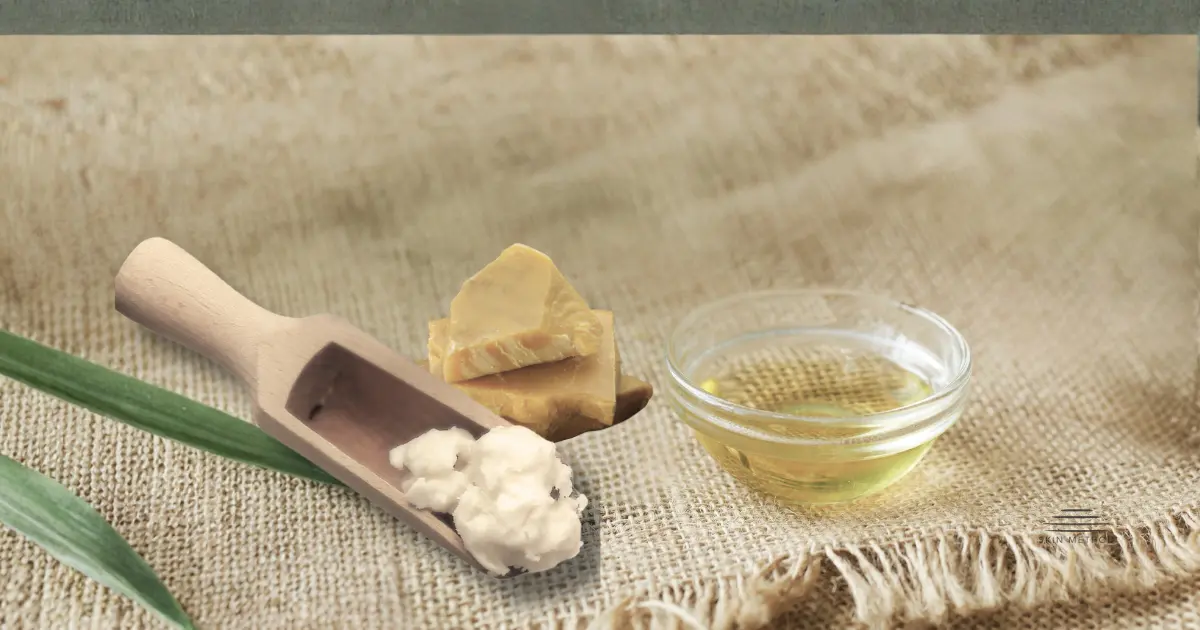
Read enough skincare ingredient lists and certain ingredients begin to appear repeatedly.
Jojoba oil.
Sunflower oil.
Shea butter.
Cocoa butter.
Beeswax.
These ingredients are often discussed individually, as though understanding each one is the key to understanding the entire product. Individual ingredients matter, but their broader category can often reveal more about the role they play in a formula.
Oils, butters, and waxes contribute different qualities to texture, spreadability, and moisture retention.
Understanding these broader roles can make ingredient lists easier to interpret and formulation decisions easier to understand.
Why These Ingredients Are Used
Oils, butters, and waxes are used to shape both how a product performs and how it feels during use.
Depending on the formula, they may help it:
- spread more easily
- feel richer or lighter
- retain structure
- remain stable
- reduce moisture loss from the skin
They may achieve those goals in different ways.
What Oils Generally Do
Oils are typically the most fluid members of this group.
Examples include:
- jojoba oil
- sunflower oil
- grapeseed oil
- almond oil
Although different oils have different properties, many contribute similar broad functions.
They often help:
- improve spreadability
- reduce friction during application
- soften the skin surface
- influence the overall feel of a product
Compared with butters and waxes, oils are generally more fluid and easier to spread across the skin. They can help a formula feel lighter, smoother, or easier to spread.
This is one reason oils are frequently chosen not only for their composition but also for the experience they create.
What Butters Generally Do
Butters are typically more solid at room temperature than oils.
Examples include:
- shea butter
- cocoa butter
- mango butter
Compared with oils, butters often contribute:
- richness
- density
- cushion
- structure
A butter-rich formula may feel more substantial on the skin. A butter-rich formula may feel denser and take more effort to spread than a lighter oil-based product.
A formulator looking for a lightweight lotion may make different choices than someone designing a richer cream.
What Waxes Generally Do
Waxes contribute something different again.
Examples include:
- beeswax
- candelilla wax
- carnauba wax
Waxes are often selected especially for their structural properties.
They can help:
- thicken a formula
- increase firmness
- improve stability
- influence texture
- create a more protective feel
A balm, for example, may depend on waxes to maintain its shape. Without sufficient structure, the product might become too soft or unstable.
This is one reason waxes are often considered structural ingredients rather than ingredients chosen solely for direct skin benefits.
Why Formulas Often Contain More Than One
One of the most common misconceptions in skincare is that a single ingredient should be responsible for a product’s performance.
In practice, formulas are usually built by combining ingredients with complementary characteristics.
For example:
- an oil may improve spreadability
- a butter may add richness
- a wax may provide structure
Together, those ingredients create a product with characteristics that none of them could provide alone.
This reflects a broader formulation principle: products work as systems rather than as collections of isolated ingredients. Why Lotions Need More Than Active Ingredients explains how structural and functional ingredients work together to create a usable product.
Products are not simply collections of individual ingredients. They are systems. The final performance depends on how the components work together.
More Is Not Always Better
Consumers are often encouraged to compare products by counting ingredients.
A formula containing five oils may appear superior to a formula containing one. A product containing multiple exotic butters may sound more impressive than a simpler alternative.
But ingredient counts rarely tell the entire story.
Instead of asking:
How many oils are included?
It is often more useful to ask:
What role is each ingredient playing?
A thoughtfully designed formula may use only a few ingredients from each category. Adding more ingredients does not automatically improve performance.
Looking Beyond Individual Ingredients
Understanding ingredient categories can make long ingredient lists easier to interpret.
Instead of evaluating every oil, butter, or wax in isolation, it can help to ask what each category contributes to the formula.
An oil may improve spreadability.
A butter may add richness.
A wax may provide firmness or structure.
Different products combine these properties according to the texture, performance, and user experience they are designed to provide.
The next time you read an ingredient list, a more useful question may be:
What role is this ingredient playing in the formula?
That question often reveals more than ingredient popularity or the number of oils, butters, and waxes included.
This article is intended for educational purposes only and is not medical advice. Skin needs and responses vary, and persistent concerns should be discussed with a qualified healthcare professional.