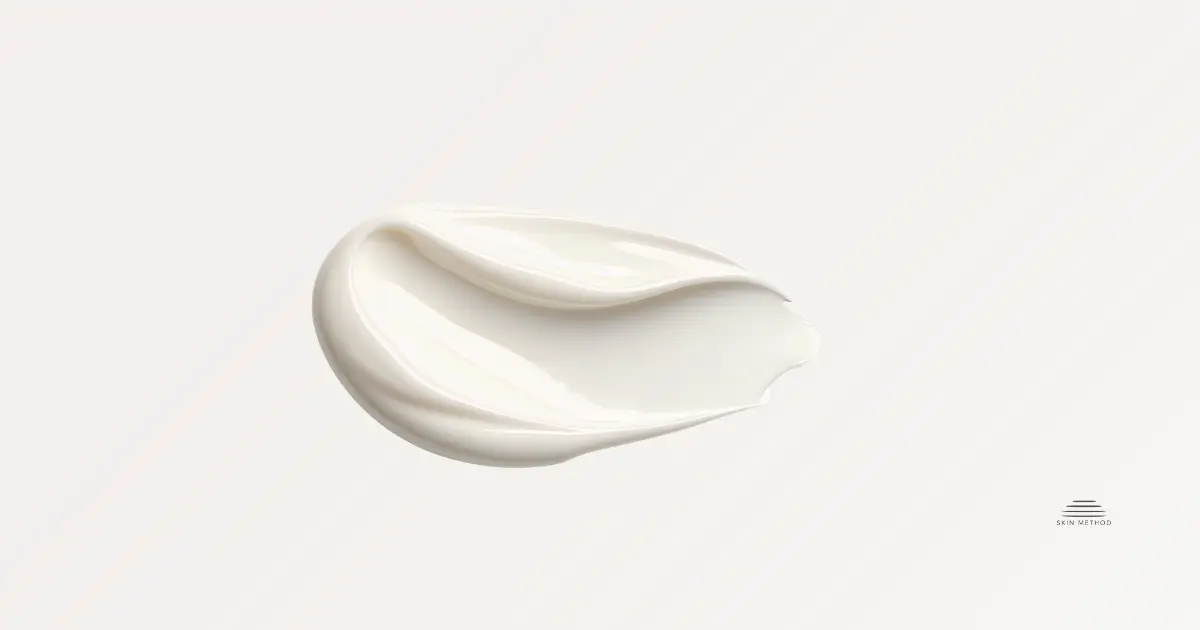
When skin feels rough, tight, or uneven, applying a moisturizer can sometimes make it feel noticeably softer almost immediately.
That change is not always the result of adding more water to the skin. Some ingredients help by changing how the skin surface feels and how smoothly it moves against other surfaces.
These ingredients are known as emollients.
Emollients are an important part of many skincare formulations. They contribute to softness, smoothness, and comfort, often working alongside ingredients that help maintain hydration or reduce water loss.
Understanding their role helps explain why a product can make skin feel better before any longer-term improvements in skin condition has occurred.
What Is an Emollient?
An emollient is an ingredient used to soften and smooth the skin.
The term describes a function rather than a particular chemical family. Emollients can include certain oils, esters, fatty alcohols, silicones, and other materials used in cosmetic formulations.
Their common purpose is to improve the condition and feel of the skin surface.
The word emollient is also sometimes used to describe an entire moisturizing preparation, particularly in dermatology. When discussing cosmetic ingredients, however, emollience is one of several functions that a moisturizer may provide.
A finished moisturizer may contain emollients alongside humectants, occlusives, and other supporting ingredients. Humectants: How They Help Skin Hold onto Water explains the properties of these ingredients in more detail.
What Happens at the Skin Surface?
The outermost layer of skin, the stratum corneum, consists of flattened cells surrounded by an organized arrangement of lipids.
When skin becomes dry, its surface may feel rough, less flexible, or uneven. Small areas of scaling can make that texture more noticeable.
Emollient materials can help improve how this surface feels.
Depending on the ingredient and formulation, they may spread across the skin, occupy some of the spaces around surface irregularities, and reduce friction.
This can make skin feel smoother and more supple.
The effect does not require every underlying cause of dryness to be resolved immediately. A product can improve surface comfort while the skin’s natural processes continue.
This is an important distinction: immediate softness is a useful effect, but it does not necessarily mean the skin’s underlying structure has changed.
Why Do Different Emollients Feel Different?
Emollients vary in their physical properties.
Some spread easily and leave a light, silky finish. Others provide greater lubrication or leave a richer, more noticeable layer on the skin.
Their behavior also depends on the rest of the formulation.
Two creams containing similar types of emollient ingredients may feel quite different because of differences in concentration, emulsifiers, thickeners, and overall product structure.
One may spread quickly and leave little noticeable residue. Another may remain on the skin longer and feel richer.
As explained in Why Texture Changes How We Experience Skincare Products, product texture affects application, comfort, and how willingly someone uses a product consistently.
Emollient selection therefore involves both functional performance and the intended sensory experience.
A product that feels elegant or comfortable is not necessarily providing greater hydration or better barrier support. Those outcomes require consideration of the complete formulation.
Are Emollients the Same as Oils?
Many oils have emollient properties, but the two terms are not interchangeable.
An oil describes a type of material. Emollient describes a function.
Certain plant oils, mineral oil, synthetic esters, fatty alcohols, and silicones can all contribute to emollience, although they differ considerably in composition and behavior.
Some spread readily and leave little noticeable residue. Others provide a richer or more persistent coating.
An ingredient may also perform several functions. A material used for its emollient properties may contribute to reducing water loss or influence the texture and stability of the finished product.
As explored in Oils, Butters, and Waxes: What Each Actually Does, these materials have different physical characteristics and formulation roles.
The useful question is what a particular ingredient contributes to the finished product, rather than whether it belongs to a familiar ingredient family.
Can Emollients Also Help Reduce Water Loss?
Yes. Emollient and occlusive functions can overlap.
Some emollient materials form a layer on the skin that also helps limit evaporation. Others primarily contribute to spreading, lubrication, or surface feel.
This is why humectants, emollients, and occlusives should not be treated as three completely separate ingredient lists.
An ingredient can contribute to more than one moisturizing function.
However, softening the skin and reducing water loss are different outcomes.
A product may feel very smooth without providing substantial protection against evaporation. Another may feel heavier because it contains materials that provide a stronger occlusive effect.
This distinction matters when evaluating a moisturizer. The way a product feels does not directly measure how effectively it helps the skin retain water.
Does a Richer Product Moisturize Better?
Not necessarily.
A rich texture can be useful, particularly when skin feels very dry or benefits from a more persistent protective coating.
But richness is a sensory characteristic. It does not tell us exactly how much water a product helps retain or how effectively it reduces water loss.
A lighter formulation may contain effective humectants and suitable emollients. A heavier product may provide greater surface coverage or a stronger occlusive effect.
The relative benefits depend on the complete formulation and the skin’s needs.
There is also a practical consideration: a product that feels uncomfortable or leaves an unwanted residue may be used less consistently.
The most suitable texture is one that supports the product’s intended function while remaining comfortable enough to use.
Do Emollients Repair the Skin Barrier?
Some emollient-containing formulations can support skin barrier function, but immediate softening and barrier improvement are not identical.
An ingredient may make skin feel smoother through its physical presence on the surface. That effect does not necessarily mean it has restored the skin’s natural lipid organization.
Other formulations contain lipids or ingredients intended to support the structure and function of the stratum corneum.
Their effects depend on the materials used, how they are delivered, and the overall formulation.
For this reason, barrier-support claims are better evaluated at the finished-product level rather than assuming that every emollient has the same biological effect.
This distinction will become especially useful when examining individual ingredients such as ceramides, whose role in the skin barrier extends beyond their contribution to the feel of a topical product.
How Do Emollients Fit Into a Moisturizer?
A moisturizer may need to perform several related functions.
Humectants help attract and bind water, supporting hydration of the skin’s outer layer.
Emollients help soften and smooth the surface, improving its feel and flexibility.
Occlusive materials help reduce the escape of water from the skin.
These functions can complement one another, and some ingredients contribute to more than one.
For example, a cream may contain glycerin to support hydration, an ester or oil to improve softness and spreading, and an occlusive material to help slow water loss.
The balance depends on what the product is designed to accomplish.
Understanding these roles makes ingredient lists more useful. It becomes easier to recognize why a moisturizer contains supporting ingredients beyond its most prominently advertised actives.
The Bottom Line
Emollients help soften and smooth the skin, improving the feel of its outer surface.
They can make dry or rough skin feel more comfortable, and some also contribute to reducing water loss or supporting broader moisturizing performance.
Their effects depend on the ingredient and the finished formulation.
A product that feels softer or richer is not automatically providing greater hydration or better barrier support. Those outcomes involve additional functions and cannot be judged from texture alone.
Understanding emollients adds another part to the picture of how moisturizers work: skin comfort depends on both the water held within the outer layer and the condition of its surface.
This article is intended for educational purposes only and is not medical advice. Skin needs and responses vary, and persistent skin concerns should be discussed with a qualified healthcare professional.