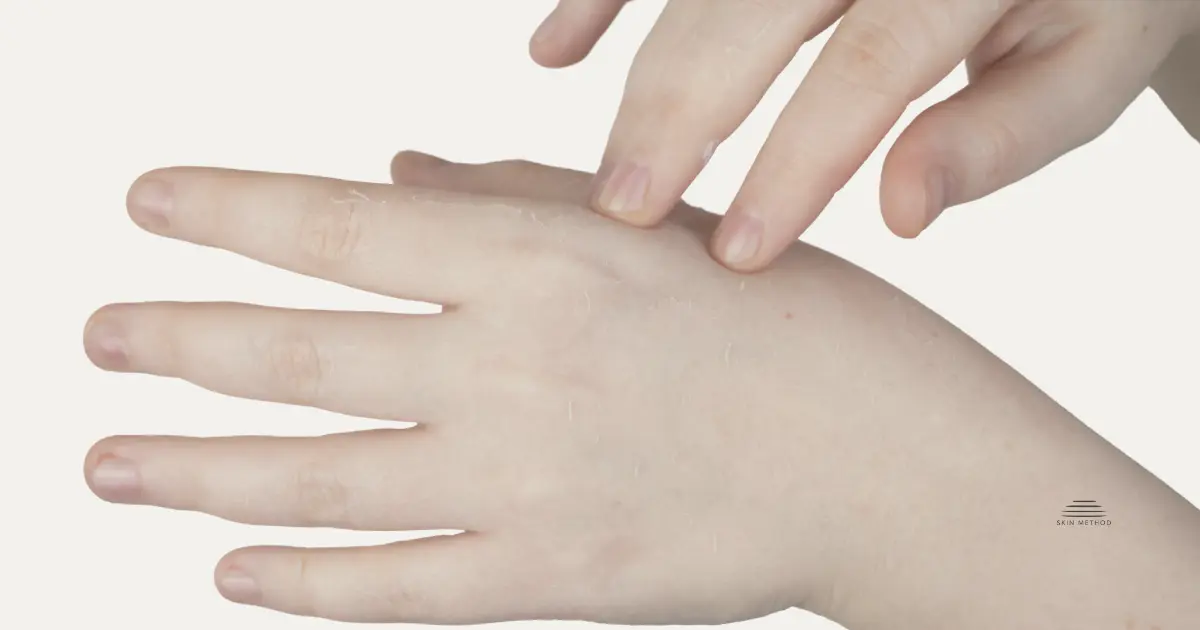
Dry skin can feel tight after washing, rough to the touch, or uncomfortable even when there is no visible flaking. Sometimes it develops gradually. Other times, skin that usually feels comfortable suddenly begins to feel dry.
These changes are often described as a lack of moisture. But dryness also involves how effectively the skin retains water, how its outermost cells behave, and how the skin responds to everyday conditions.
Understanding what happens at the surface can help explain why dryness develops and what kind of care may be useful.
What Actually Happens When Skin Becomes Dry?
The outermost layer of skin, called the stratum corneum, needs sufficient water to remain flexible and function normally.
This layer contains natural water-binding substances, while organized lipids between its cells help limit water loss.
When the stratum corneum cannot maintain adequate hydration, it may become less flexible, and the skin surface can begin to feel rough or uneven.
The normal shedding of surface cells may also be affected. Instead of separating gradually and becoming almost unnoticeable, these cells may remain attached in small groups, contributing to visible flaking or scaling.
Dryness can also be associated with changes in the skin’s protective barrier. However, these changes vary in degree, and a temporary sensation of dryness does not necessarily indicate substantial barrier damage.
The central issue is that the outer skin layer is no longer maintaining the hydration and surface condition needed for normal comfort.
Why Does Dry Skin Feel Tight or Rough?
Water contributes to the flexibility of the stratum corneum.
When hydration becomes insufficient, the skin may feel less pliable. Normal facial movements, washing, or contact with clothing can make tightness or discomfort more noticeable.
Roughness may develop when the surface becomes uneven or when the normal shedding of skin cells is disturbed.
Flaking is a visible sign of these changes, but skin does not need to be visibly flaky to feel dry.
Some people notice tightness first. Others experience rough patches, itching, or a change in how their skin feels when applying products.
These sensations are useful observations, but they do not measure hydration directly.
Tightness can also occur because of irritation or cleansing-related effects. A particular sensation alone cannot establish the condition of the skin barrier.
Is Dry Skin the Same as Dehydrated Skin?
Skincare advice often describes dry skin as a skin type that lacks oil and dehydrated skin as a temporary condition that lacks water.
This distinction is easy to remember, but it oversimplifies skin physiology.
In dermatology, dry skin is commonly called xerosis. It involves inadequate hydration of the stratum corneum and may be associated with changes in the skin’s lipids and barrier function.
Sebum, the oily substance produced by sebaceous glands, influences the skin’s surface characteristics. However, the amount of sebum produced does not, by itself, determine how much water the stratum corneum retains.
The term dehydrated skin is often used in cosmetic discussions to describe skin that temporarily feels tight, dull, or insufficiently hydrated. It is not consistently defined as a separate clinical skin type in the way popular skincare charts sometimes suggest.
This does not mean the sensation being described is imaginary. Skin hydration can change temporarily, and someone whose skin is usually comfortable may experience dryness under different conditions.
The difficulty comes from treating dry and dehydrated skin as two completely separate problems that always require different ingredients or routines.
A more useful approach is to consider what the skin is experiencing, how long the changes have been present, and what might be contributing to them.
Can Oily Skin Also Feel Dry?
Yes. Skin can produce noticeable amounts of sebum while still experiencing dryness or discomfort.
Oiliness and hydration describe different characteristics.
Sebum contributes to the oily appearance and feel of the skin. Hydration refers to the water present within skin tissue, particularly the stratum corneum when discussing surface dryness.
These characteristics can influence one another, but they are not interchangeable.
Someone with oily skin may develop tightness, rough patches, or flaking after frequent cleansing, exposure to irritating products, or changes in environmental conditions.
This does not necessarily mean their underlying tendency toward oiliness has changed.
It also means that adding stronger cleansers to manage visible oiliness may not be helpful when the skin is already uncomfortable.
Understanding the difference allows both characteristics to be considered without assuming that oily skin cannot need moisturizing support.
What Can Cause Skin to Become Dry?
Dryness can develop for several reasons, and more than one factor may be involved.
Some people naturally have skin that is more prone to dryness. Aging can also influence the skin’s ability to retain moisture.
Environmental conditions play a role. Low humidity, cold weather, and dry indoor air can make it harder for skin to maintain adequate hydration.
Daily habits matter as well. Frequent washing, prolonged exposure to water, harsh cleansing products, and very hot showers may contribute to dryness.
Some skincare products can cause irritation, making the skin feel tight, rough, or uncomfortable.
Dryness may also occur with skin conditions such as eczema or psoriasis. Certain medications and medical conditions can contribute to persistent or excessive dryness.
These causes are not interchangeable.
Skin that feels temporarily dry after washing may need a different response from skin that is persistently itchy, inflamed, or cracked.
Recognizing when dryness develops and what accompanies it is often more useful than assuming every episode has the same explanation.
Why Doesn’t Adding Water Alone Solve Dryness?
Water can temporarily wet the skin surface, but some of it evaporates after washing or bathing.
For skin to remain comfortably hydrated, the stratum corneum must retain enough water over time.
As explained in How Skin Holds and Loses Water, natural water-binding substances and the organization of the skin’s protective lipids help regulate this balance.
When these mechanisms are insufficient, a moisturizer can provide additional support.
Humectants help attract and bind water. Emollients help soften and smooth the surface. Occlusive ingredients help reduce water loss.
Many moisturizers combine these functions.
This is why applying a suitable moisturizer after washing may be more useful than repeatedly wetting dry skin.
The aim is to support water retention and surface comfort, rather than simply increasing the amount of water that comes into contact with the skin.
What Helps Support Dry Skin?
The appropriate approach depends on what is contributing to the dryness and how severe it is.
For ordinary dryness, gentle cleansing and avoiding unnecessary hot or prolonged washing can help reduce additional stress on the skin.
A suitable moisturizer can support hydration and reduce water loss, particularly when applied soon after bathing or washing as explained in Moisturizer: What It Should Actually Do.
Different formulations provide different levels of moisturizing support. Some people find a light lotion sufficient, while others benefit from a cream or ointment, especially when dryness is more pronounced.
The product should provide enough support for the skin’s condition while remaining comfortable to use.
It can also help to consider whether a recently introduced product, frequent exfoliation, or another part of the routine is contributing to irritation.
Reducing unnecessary irritation may be useful, but a shorter routine is not automatically a more effective one.
For everyday dryness, the goal is to address the contributing factors and provide appropriate moisturizing support without adding unnecessary complexity.
When Is Dryness More Than an Everyday Skincare Concern?
Mild, occasional dryness can often improve with ordinary skincare adjustments.
However, persistent or severe dryness may require additional evaluation.
Painful cracks, bleeding, significant itching, pronounced inflammation, oozing, or recurring irritated patches are reasons to seek medical advice.
Dryness that continues despite appropriate gentle care may also indicate an underlying skin condition or another contributing factor.
A dermatologist can help determine the cause and whether specific treatment is needed.
The Bottom Line
Dry skin develops when the outer skin layer cannot maintain the hydration and surface condition needed for normal comfort.
It may involve reduced water retention, changes in flexibility, disturbed shedding of surface cells, or changes in barrier function.
Dryness can occur in both oily and less oily skin. It may be influenced by environmental conditions, daily habits, age, and underlying skin conditions.
Understanding these factors helps make skincare decisions more proportionate.
For ordinary dryness, gentle care and a suitable moisturizer may provide enough support. Persistent or inflamed dryness may need further attention.
The useful starting point is to understand what the skin is experiencing and what may be contributing to it.
This article is intended for educational purposes only and is not medical advice. Skin needs and responses vary, and persistent skin concerns should be discussed with a qualified healthcare professional.